McGary Audio

Showing posts sorted by relevance for query product of the year. Sort by date Show all posts

Friday, January 1, 2016

2015 EAN Awards Announced!
Everything Audio Network
Products-Of-The-Year

©Everything Audio Network

by John Gatski
 For 2015, EAN has selected its Product of The Year Award winners. Most audio products reviewed on this site are top-notch audio components, but there is just a bit extra within the products that we chose this year, either in their performance, utility or value or a combination of these factors.Hope the folks who bought the gear are happy with their choices. We sure enjoyed reviewing them!

Audiophile Cable Product Of The Year
Wireworld Eclipse 7
Unbalanced RCA/Balanced XLR
                       
  I have been using Wireworld Eclipse 7 RCA ($450 for 1-meter pair) and Eclipse 7 balanced XLR interconnects ($450 for 1-meter pair) for reference listening for three years. Almost all review components in for testing are linked using the Eclipse 7s. Though there seems likes a million cables out there to choose from, I find the Wireworld’s very neutral and balanced with a rock solid center image and no hyper-exaggeration in the L-R and front to back presentation. A perfect cable for hi-res listening.

Audiophile Luxury Product of The Year:
Pass Labs X350.8 Stereo Amplifier
  Pass Labs took one of the best big power high-end hi-fi amps and made it better. Borrowing from its hyper Class A XS line, the .8 version of the X350, priced at $14,200, offers smoother mid/treble character without losing its detailed soundstage and incredible bass response. Yeah I got on one in my system. Read the review!

Audiophile D/A Product Of The Year:
Mytek Manhattan DAC/Preamplifier
  The versatile $5,500 Mytek converter/preamp/HP amp serves up the most analog sounding D/A units out there, thanks to designer Michal Jurewicz’s custom attenuator. And the features are deep (DSD direct digital input, upsampling, adjustable filter);  you can even get it with a phono preamp. Lots of analog I/O as well. Read the review!

Audiophile Speaker Product of The Year:
Paradigm Prestige Series 15B Two-Way
  These mid-priced small bookshelf/stand-sized speakers ($799 each) are an amazing bargain. Plenty of bass, and a three-time the price midrange/top end sonics that are super accurate. Hi-res music is a revelation through the 15Bs compared to many similarly priced speakers. Read the review!

Audiophile Preamp Product Of The Year:
Rogue Audio RP-5 Stereo Tube Preamplifier
 Rogue Audio’s new standard bearer RP-5 ($3,495) features much more efficient microprocessor control, improved S/N and distortion performance to give it one of the most accurate tube pre out there. Phono pre version is better than numerous standalone vinyl pres out there. Read the review!

Audiophile “Best Bang For The Buck”
Product of The Year: Essence HDACC D/A 
  I can’t gush enough about the Essence DAC. At under $500, you get an ESS DAC chip, a built-in A/D to digitize your vinyl, good headphone amp. If that was not enough,the feature list includes HDMI input and numerous other analog/digital I/O. There ain't’ an all in one that can touch this for so little money. Read the review!

Audiophile Portable DAC Of The Year:
Oppo HA-2 D/A For Smart Devices
  The $300 Oppo HA-2 USB DAC, equipped with ESS Sabre32 mobile chip, is so good that you can use it for a standalone audiophile DAC for headphone listening. Its headphone soundfield is heads above most portable hi-res players, plus you get all that smart device connectivity and the ability to charge your phone from the DAC. Read the review!

Audiophile Vinyl Product Of The Year:
Luminous Audio Arion Phono Preamlifier
  Designed by Mike Bettinger, this Arion phono pre ($6,395) is built the way I like em — super accurate and clean. With my Benz cartridge and a VPI Scout, this phono pre did not hype the sound. It makes the best cartridge and LP sound  as open and spacious as the source. Very low noise as well. One of the best phono pre's at any price. Read the review!

Audiophile Hi-Res Portable Player
Product Of The Year: TEAC HA-P90SD


  The HA-P90SD, street priced at $599, gives you native DSD playback via DoP, and up to 24/192 PCM in a solidly built, easy-to-operate package at way less than most of its high-end competitors. Headphone amp sound is detailed, wide and deep. Read the review!

Audiophile Headphone Product Of the Year:
AKG K812 Open Stereo Headphone
 The $1,995, built-in-Austria AKG K812 has about the most expansive soundstage I have ever herd from a mass produced headphones. Bass is tight and accurate; the transients are spot on for hi-res listening. And you get that AKG open air comfort that I crave. Read the review!

Home Theater Product Of The Year:
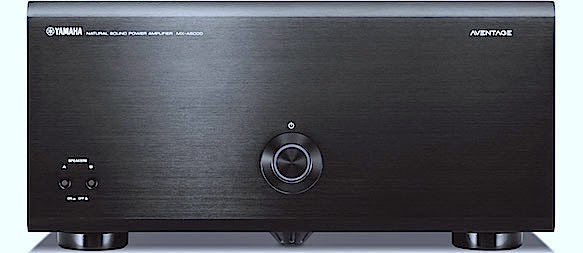
Yamaha MX-A5000 Multichannel Amplifier
  Balanced or single ended, the $2,995 150-wpc MX-A5000 is an excellent multichannel amplifier that competes with some of the best esoteric 5.1-plus channel amps. A deep soundstage and a smooth, tight midrange/treble projection makes for a impressive movie soundtrack or hi-res surround listening. Up to nine channels of output. Read the review!

Home Recording/Live Setup
Accessory Product Of The Year:
Audix MB5050 MicroBoom
  The MB5050 MicroBoom system, at $599, is a handy way to place microphone in an unobtrusive manner for a variety of music applications, including choir, drums, organ, etc. The extendable boom is perfect for instrument-sized mics to record those intricate instruments in hi-res. Read the review!

Home Recording Multichannel Interface
Product Of The Year: Prism Sound Titan
  The $3,995 Prism Titan is a fantastic, eight-channel, USB recording interface with an easy-to-use computer DAW mixer GUI and excellent converters. I have never heard better from a $3,000-plus integrated computer DAW interface. Mic preamps are aces. Read the review!

Home Recording 2-Channel Interface
Product Of The Year: TASCAM UH-7000
  For just a few hundred dollars ($399 to be exact), this stereo recording interface is quite good with very good A/D and D/A performance. Mic pres are quiet and dynamic, and we like the onboard controls and meters. Read the review!

Home Recording/Audiophile D/A Converter
Product of The Year: Benchmark DAC2-DX
  Take the ultra accurate PCM/DSD DAC2 converter add AES/EBU and dual buss output and you now have the ideal studio or hi-fi DAC for headphone or speaker listening — the $1,995 DAC2-DX. And no DAC measures any better. Read the review!

Home Recording Budget Microphone
Product of The Year:
Shure PGASTUDIOKIT4
  At its street price of $299, the PGASTUDIOKIT4 is a great value for the amateur and working professional musician/engineer who wants a quad set of really good microphones. Even home recording audiophiles will be happy with the results. Yes, we said under $300. Read the review!

 John Gatski has been evaluating consumer, audiophile, home cinema and professional audio gear since 1988. In 1995, he created Pro Audio Review, and he has written for Audio, Laserviews, Enjoy The Music, The Audiophile Voice, High Performance Review, Radio World and TV Technology. Everything Audio Network is based in Kensington, Md. Articles on this site are the copyright of the ©Everything Audio Network. Any unauthorized use, via print or Internet, without written permission is prohibited. John Gatski can be reached via everything.audio@verizon.net


Sunday, December 21, 2014

2014 Awards!
EAN Announces
Products of The Year


Audiophile, Home Cinema, Recording, Personal Audio Gear Recognized For Outstanding Performance

by John Gatski
  For 2014, EAN has selected its Product of The Year Award winners. Most audio products reviewed on this site are top-notch audio components, but there is just a bit extra with the products that I chose this year, either in their performance, utility or value or a combination of these factors. Happy Holidays. You may end up buying one of these products — just like I did.

Audiophile Product Of the Year
Oppo HA-1 DAC/HP Amplifier,
Benchmark AHB2 Amplifier
DAC/Headphone Amp
Click Oppo HA-1

  There are two in this category: the Oppo HA-1 DAC/headphone amp and the Benchmark AHB2 amplifier. The Oppo HA-1 gets its award designation because it offers a state-of-the-art DAC that is virtually future proof — with its up to 32 bit/768 kHz PCM decode, as well as quad-speed DSD. The clincher is the way-above-its-price Class-A discrete headphone circuit that is so good I use it for line stage output. It also has plenty of connectivity, (analog I/O and all digital inputs), advanced features (such as digital word length indicator that only a few DACs are equipped with) and it only costs $1,299!
  An audiophile would have to spend four times as much to get significant improvements in audio and match the features set. In my opinion, If you re serious about hi-res via headphones, the Oppo HA-1 is a must buy.


Audiophile Amplifier
Click Benchmark AHB2
  The $2,995 Benchmark AHB2 gets the award because its design pushes the spec envelope of power amplifiers. It is no longer enough to have 100 dB S/N ratio (or worse) spec’d amplifiers when you have the Benchmark measuring in excess of 130 dB! That is better than the majority of DACs can perform. It is digital performance from an analog amp. And the amp sounds great as well — a very neutral analog sound with tight bass and gracious stereo image. Throw in the reasonable price tag, and its award status is a no-brainer.


Home Recording Product of The Year
TASCAM DA-3000 24-bit/DSD Recorder
  The DA-3000 is for those of those who like to record and listen to audio in a pro or an audiophile setting. This combo A/D-D/A recorder/player, priced at $1,299, is the successor to the best buy DVRA-1000HD. The DA-3000, however, adds double speed DSD record/playback, CF card storage, and is about $600 less than the old DVRA-1000-HD.
  The on-board A/D-D/As for PCM and DSD are way better than many separates. Even against high-end separates the audible difference is nearly nil, Plus, it can record and play using CF, SD card as well a USB thumb drive. It is the most-utilized tool in my recording arsenal. Audiophiles can use the DA-3000 just for download playback — up to 24/192 and DSD; it has the right connections (balanced and unbalanced analog, plus SPDIF, TOSlink and AES/EBU digital I/O), and a good headphone amp. Maybe you want to archive your vinyl collection in hi-res...be my guest.

Home Cinema Product of the Year
AudioControl AVR-6 7.1 Channel Receiver
Click AudioControl AVR-6

  We reviewed really nice receivers this year, and they all offered quality sound. I chose the $3,950 AudioControl AVR-6 because of its audiophile-caliber sound quality, The openness and spatial projection is definitely a cut above most receivers. The decoded sound from BDs is impressive. I even played hi-res from an Oppo BD-105, while connecting the AVR-6 with my MartinLogan Montis electrostatics, and came away quite impressed. It does not have many Internet apps, DSD decoding via HDMI, or other features that A/V receivers are equipped with, and it is a bit pricy, but what it does have is ‘the sound.” It is better than many separate pre/pro amps combos I have auditioned.

Personal Audio Product of the Year
USB Audio Player Pro Android Player
Hi-Resolution Player Software For Android
Click USB Audio Player Pro

  Okay, it has not officially been reviewed on EAN yet, but, boy, do I ever use USB Audio Player Pro. This $9.00 Android hi-res player features up to 32-bit/384 sample rate PCM and 2.8 MHz DSD playback when linked to a compatible a USB-input DAC. Plus, it decodes FLAC, WAV, AIFF, MP3, OGG, etc. It works with most noted Android tablets, and its transparent playback to your favorite DAC sounds aces. Rivals the computer player software. USB Audio Player Pro also contains playlist management features, EQ and several tweaks to assure smooth playback with different devices.
  What’s really handy is its portability. USB Audio Player Pro allows you to play super high res, such as 24/384 and DXD), without going through a computer. Thus, it is extremely portable. I have it installed on two Dell tablets and an Android Smartphone. I keep one in my main audiophile rig and one in my recording suite to monitor my home-brew 24/384 PCM guitar recordings. I also use an Android Smartphone and a Resonessence Concero HP for mobile hi-res listening.
  There are a few hi-res audio software players out there for smart devices to output hi-res audio via USB, but none that I have tried can touch USB Audio Player Pro.
  
"Luxury Audio" Products of the Year
Pass Labs XS-150, MartinLogan Neolith

Click Neolith or Xs-150


  Although they are well above $60,000, I have to acknowledge two ultra high-price products I got the chance to hear this year. The Pass Labs Xs-150 "super Class A" MOSFET monoblock amplifier, at $65,000 per pair, is an exquisite amp that exudes high class all the way. The Xs-150 has a luscious, musical character and the widest soundstage I have ever heard from an amplifier.
  The starts-at-$80,000 MartinLogan Neolith is the company's flagship, top-class electrostatic that I took a few hours to evaluate at an area dealer last November. The Neolith exhibits the same enveloping sonic character of the best ML speakers — only the much-larger transducer fills up big listening rooms with its open, detailed soundstage; its passive, dual-bass driver arrangement kicks out 25-Hz bass as loud and tight as any subwoofer. A more detailed review of my experience with the Neolith is coming shortly.

  John Gatski is publisher/owner of the Everything Audio Network. Articles on this site are the copyright of the ©Everything Audio Network. Any unauthorized use, via print or Internet, without written permission is prohibited.

Monday, November 21, 2016

Audiophile Review!
The New Mytek Brooklyn D/A:
"Hyper-Featured Half-Rack DAC
Includes Phono Preamp and MQA"


        "Great Sound, Plus An Expansive Set Of Features!”

Brevis
Price $1,995
Likes: Sonic Q, features galore
Dislikes: logo lighting colors?
Wow factor: it does everything!
More info: Mytek Brooklyn

by John Gatski
  I have been a big fan of Michal Jurewicz’s Mytek A/D and D/A designs since early 2003 — working extensively with the pro converters in my old days as editor in chief of  Pro Audio review.
  Mytek has morphed from a strictly pro to pro and hi-fi digital converter company over the last 10 years, making such esteemed products as the Mytek Stereo 192 A/D and D/A, professional multichannel DSD A/D-D/A, and the venerable Manhattan D/A with its custom analog attenuator.
  Now comes a new generation of Mytek converters including the Mytek Brooklyn reviewed here. A new Manhattan II is coming as well.

Features
  Priced at $1,995, the Brooklyn takes the convenience and size of the Stereo 192-DSD DAC — adding a slicker interface and improving the overall sonic accuracy via the line stage and headphone amplifier. The Brooklyn can handle up to 32-bit integer/384 PCM (it’s coming folks) and 4X DSD via USB2 connection.
  In terms of accurate conversion, the Brooklyn really nails it as a serious, quality D/A converter, but it is so much more — with nearly all the bells and whistles any audiophile could want: line preamp, phono preamp, headphone amp, analog/digital volume choice, and the MQA decoder.

  The new DAC also includes the recently released MQA (Master Quality Authenticated) decoder. MQA is coding scheme that is said to allow high-res music to be streamed from such sources as Tidal at a much lower rate than a normal high-res sized download. Other features include an excellent headphone amplifier, a MM/MC phono preamp, word length/sample rate display, and the slick-looking graphical interface. It also has digital connections for DSD sources.
  According to Mytek’s Jurewicz, the ergonomic ease of use and interface are obviously a step up over the Stereo 192-DSD, but the sonic improvements are quite audible. Audio path upgrades include:

•Utilization of the newer Sabre 9018 chip (increased detail)
•Addition of a 0.82ps Femtoclock;
•Two-output (with optional) balanced, dual-mono headphone amp  with 2X the power of the Stereo 192-DSD;
•Much improved user interface with OLED displays;
•Mytek Control Panel software enables control from computer, in the future also via iPad;
•New USB Class 2 interface, low latency, full integer 32-bit USB interface, driverless for Mac and Linux, improved clocking and lower EMI.

  Jurewicz also noted the low-noise MC/MM analog phono stage (rare in a DAC), a second SPDIF input and an external power supply connection option.
  Like the Stereo 192, the half-rack Brooklyn is a busy little box. The front panel sports the two headphone jacks, two left-side function buttons, the center OLED screen, two right-side function buttons, and the multifunction volume control, which doubles as on/off switch and mode  selector.

Most any source will work with Brooklyn

  The back panel is filled to the brim as well: a pair of balanced analog outputs, a pair of analog RCA/phono inputs, a pair of analog RCA outputs, two SPDIF/DSD coax inputs, SPDIF/TOSLink/ADAT optical input, word-clock sync BNC I/Os and, er, a phono ground lug. That’s right folks, this DAC contains a bonafide phono preamp. It also has a 12V port for powering via battery, an option more likely to be used by remote pro engineers.
  The Mytek Brooklyn was designed with two volume controls: a 32-bit, 192-dB DR digital onboard control built into the ESS 9018 chip circuit, and a modified analog volume control with Mytek’s special brew of analog parts. The analog volume control imparts a touch more smoothness and familiar shading that you would except from an good analog volume.

Deep feature set
  Because of the vast number of input options and adjustment parameters available, the Brooklyn requires a bit of familiarizing with the multi button menus and the OLED screen. But it only takes a lap or two around the controls and buttons to learn the functions
  Parameters, including input selection, are engaged via the two buttons on the left side of the screen and the two buttons on the right side of the screen. The volume control allows toggling through the categories in each window, and pushing the volume control selects the parameters.
  The most leftward button engages the Input mode, Coax function, Analog input options, Power-on options and Device info. Pushing the button and then rotating the volume control to Input mode shows the various options: USB, AES/EBU, SPDIF 1, SPDIF 2, Optical and Analog. Select an input and push the volume knob, To disengage from the input mode, push the menu button again.

  Listening to the LP’s via a Clear Audio Emotion belt-drive turntable and a Benz L04 MC cartridge, the preamp did itself proud. It lacked the euphonic warmth of some of the high-end tube preamps I have auditioned, but its balance, low noise and audible detail, made for a good match with the Benz cartridge.

  Pushing the button again and then rotating the volume control one click engages the Coax function, which allows the choice between PCM or DSD via SDIF /SPDIF using the digital coax. Another push of the leftward menu button and volume control click enables the Analog options mode. This mode allows the user to select analog line input, or phono preamp mode — MM or MC. The last modes controlled by the first button are Power (Auto/Standby/Work) and Info, which shows the unit’s serial number and allows the firmware to be restored to original settings.
  The second menu button enables Volume Control while in the setup mode (otherwise you control it in the display mode), MQA decode enable/disable, Logo Light brightness level, PCM filter slope (three options).
  Menu Button 3 (immediate right side of display) enables Digital Sync (internal/external clock), Volume Control-select (analog or digital), Standby Light brightness level, and DSD Filter (three options). The fourth menu button selects Output (HP/Main/Both), Volume Control Bypass, Logo Light Color (16 different colors, whew!) and Remote Control option.
  There are a lot of operational options, but the Brooklyn is much easier to navigate than the Stereo 192-DSD DAC’s menus and  a million percent easier to change parameters than the original Manhattan I. (Hopefully, the new Manhattan II will get some of the functionality of the Brooklyn).
  The Mytek Brooklyn is one of the first DAC’s to be equipped with MQA decoding. MQA-encoded music is claimed to deliver hi-res quality for streaming, contained in a smaller file size than conventional PCM hi-res files, typically 24/96 or 24/192. Additionally, MQA applies a “deblurring” process that is said to restore proper “timing,” which is claimed to be more faithful to the original source recording.

  The Mytek Brooklyn is one of the first DAC’s to be equipped with MQA decoding. MQA-encoded music is claimed to deliver hi-res quality music for streaming, contained in a smaller file size than conventional PCM hi-res files, typically 24/96 or 24/192. Additionally, MQA applies a “deblurring” process that is said to restore proper “timing,” which is claimed to be more faithful to the original source recording.
  There has been a full marketing blitz on MQA with mainstream audio press singing its praises. However, since there is not that much music out there, I am holding my full opinion until I do more critical listening.
  Of the few bits of MQA I have heard, including a brief sampling of the 2L label’s 24/352 original recordings and their MQA-processed versions, MQA sounds to my ear like there is some lossiness. For example, On the 2L Mozart — Violin Concerto in D recording (24/352 DXD  original PCM recording), which I use for demos and have listened to more than 200 times since 2012, I found that the MQA version did not sound as dynamic as the original.
  The MQA was a touch smoother, similar to DSD, but the violin harmonic textures did not seem as fleshed out. BTW, the MQA version reduced the size of the original DXD 24/352 FLAC from 700 MB to under 100 MB in the FLAC format. So it is quite effective in terms of file-size efficiency. 
  Although I am somewhat ambivalent about MQA, based on the 2L samples I heard, I need to listen to more original PCM vs. MQA -processed samples to make up my mind. So far, there is not a dearth of MQA/original comparison files out there.

The set up
  I installed the Mytek Brooklyn DAC in several listening scenarios. Its versatility made it a natural for the audiophile rack, the home recording rig — and as a computer DAC.
  In the audiophile room, the Brooklyn was connected to a Coda high-current preamp, which fed a Pass Labs X350.8 MOSFET output amplifier. Sources included Oppo BDP-105 universal player, Dell Venue tablet with USB Audio Player Pro (with the bit-perfect upgrade) and a TASCAM DA-3000 hi-res stereo recorder/player for playing DSD home recordings. The Pass amp powered a pair of MartinLogan Montis electrostatic speakers
.
Comes in an attractive silver platinum...

  Wireworld Eclipse speaker, analog interconnect and digital interconnect were used to link the components. Essential Sound Products Essence II power cords and power strip provided power to the various components in the evaluation system.
  For comparisons, I had the previous generation Mytek Stereo 192-DSD DAC, the Mytek Manhattan I, as well as a Benchmark DAC2-DX DAC. For headphone listening, I used AKG K812s, K702 Anniversary and a pair of Oppo PM-2 planar magnetic headphones in balanced mode for evaluating the headphone amplifier.
  As mentioned, considering how many features are jammed into the Brooklyn, it is quite easy to adjust the settings: inputs, input assignment, digital filters, phono settings are readily accessible via the menu buttons and a few volume control turns and pushes.
  As a proponent of word-length display in D/A converters, I am happy that Mytek shows both PCM word length and sample rate in the main screen, all the way to 32-bit integer. With computer playback’s potential to default to 16-bit without the operator knowing it, all DACs should have a real-time, word length status indicator to  validate the correct bit rate.

The audition
  Via the audiophile rack, the first track up was, of course, Warren Bernhardt — So Real, the title track from the 2000 DMP DSD release. I immediately could hear the improvement over the previous generation Stereo 192-DSD DAC. Although there was familiar similarity in the two DAC sonic character, the Brooklyn relayed an increased openness in the space separation between the Steinway piano, bass and drum cymbals. The textures were also smoother and more refined via the Brooklyn, The metallic sheen of the brushes seemed more accurate on the newer DAC, whereas the older model was a bit more brash
  On the “Autumn Leaves” track, which has a vast dynamic range, the loud parts were smoother through the Brooklyn. Yet the bass was tight and fast with no euphonic bloom. Switching to the digital volume control I detected a smidgen of edge on high-velocity transient sounds (piano), but it was still smoother than the analog volume on  the Stereo 192-DSD.

For those who like their color on the darker side

  The Brooklyn really shined on a DSD-to-PCM dub of Gene Bertoncini — Body and Soul, a nylon string guitar recording. The intricate string plucks and the gorgeous soundstage were a pleasure to audition through the Brooklyn. The natural, smooth, yet dynamically subtle persona of a properly mic'd nylon string guitar can get lost with lesser DACs. Not the Brooklyn; it is one of the best DAC’s I have ever heard for this music genre.
  Switching to Classical and pure-DSD playback, I played the Channel Classics DSD download of  Telemann — “Suit in A: Concertos And Cantata —  Ihr Völker Hört. I played the tracks from the TASCAM DA-3000 and output the DSD bitstream to Brooklyn’s SDIF inputs. This allowed me to judge the Mytek’s DSD playback.
  The refined baroque music of Telemann gets the royal treatment via this recording  — with a deep soundstage and natural ambiance that the Brooklyn-relayed perfectly. The woodwinds were breathy and melodic without being harsh. Using the Mytek’s clock sync with the DA-3000, I noticed a small reduction in the thickness of the midrange of the tracks over using the internal clock of the TASCAM. It was subtle, but after three plays, I clearly heard the upped precision of the dynamic transients.

Digital, analog, and vinyl too
  Since the Brooklyn has a phono preamp I sampled several records, including a Puccini opera box set from the 1960s, and my clean copy of Wes Montgomery‘s landmark live recording: Full House, reissued a few years ago in a Steve Hoffman-mastered HQ vinyl. 
  Listening to the LPs via a Clear Audio Emotion belt-drive turntable and a Benz L04 MC cartridge, the preamp did itself proud. It lacked the euphonic warmth of some of the high-end tube preamps I have auditioned, but its balance, low noise and audible detail, made for a good match with the Benz cartridge. The LP playback was tight, and the high end showed some sparkle without too much bite; channel separation was typical of most phono pre’s and cartridge combos.
  It’s not often you get a phono preamp in a DAC, but this one is better than many standalone, especially for those who like their LPs with a bit more honest flavor. The phono pre may be not a deal closer for digital focused auiophilsl, but for customers who want it all in a small box — with audio quality. — the Mytek Brooklyn may be the ticket.

Under the hood of the Mytek Brooklyn

  Switching to Pop/Rock and digital files, I played the 24/96 transfer of Fleetwood Mac’s “Dreams” hit single which is, of course, from the mega-popular Rumours 1977 album. This track is a great test for D/A converters — in that it has that classic multi-track, Rock recording persona — with neatly placed instrumentation, a well-centered main vocal and an enveloping backup vocal chorus. Though the recording was analog, it has a taut, crisp character. On less than stellar DACs, it can be bright and harsh. A good DAC can handle the nuance without being hard sounding or overly warmed over. Such is the case with Brooklyn. All that percussive energy, the air around the guitar tracks, and the chorus receive the royal treatment from the Mytek. The splashy cymbals are much smoother than the Stereo 192-DSD, but not in a filtered way; it sounds like the way it was recorded.

Listening to DACs
  As I auditioned more than 40 albums and numerous single-cut hi-res samples of music with the Brooklyn, I did numerous A-B listening sessions with other DACs: the first-generation Mytek Manhattan I, acclaimed for its custom analog attenuator; and the Benchmark DAC 2-DX. I love the big soundstage of Manhattan's analog attenuator, but liked the Brooklyn’s dynamic presentation even more. And the stereo sphere is still very good. Plus, the Brooklyn’s is ten times easier to use than the Manhattan I.
  The critically acclaimed Benchmark DAC 2-DX offers similar performance to the Mytek, though the DAC 2 might be a touch smoother. However, for the same money the Brooklyn offers so many more features: the MQA decoder, phono preamp, multi-DSD digital connection, filter options and, of course, the 16 flavors of logo light color options.
  As for MQA, I did not have enough music that was encoded with the process to make a meaningful determination. Via the 2L tracks I downloaded and listened, I did notice an audible shrinkage when it came to the space between instruments and dynamics. The instrument’s individuality emerged more on the original recording. The MQA did impart a smoothing texture to the edge of the violin tone — kind of like DSD. 
  Maybe on different recordings, MQA does better. Once more recordings are released, we will have more-definitive listening sessions with Brooklyn and MQA-encoded recordings.

What is impressive is how Michal Jurewicz added tons more features, refined the PCM/DSD audio output and kept the Brooklyn at $2,000! The Stereo 192-DSD D/A was a great sounding unit. But the Brooklyn is exceptional in comparison. For dynamics and inner detail, I even like it better than the Generation 1 Manhattan, which was more than $5,000!

  From my perspective, however, MQA is not the main selling point of Brooklyn. What is impressive, in the aggregate, is how Michal Jurewicz added tons more features, refined the PCM/DSD audio output and kept the Brooklyn at $2,000! The Stereo 192-DSD D/A was a great sounding unit. But the Brooklyn is exceptional in comparison. For dynamics and inner detail, I even like it better than the Generation 1 Manhattan, which was $5,000!
  As a hi-fi DAC, I had not one major complaint about Brooklyn; I operated it right out of the box with no reference to the online manual; figured it out on my own. And everything worked as it should. I even selected tangerine as my logo light color option. Connections were a snap, and the menu item selections were mastered in minutes.

A pro-caliber D/A
  With Mytek’s professional digital converter history, it only makes sense that the Brooklyn fits right into the home-recording, pro/semi-pro/musician world — just as well as it does in the hi-fi realm. With the ability to playback up to 128X DSD and 32-bit/384 PCM, and inclusion of a precision-sounding headphone amp and line stage, this DAC is one worthy of serious pro use. I used the Mytek for playback of several home brew DSD 64X and 128X recordings, which were played through my TASCAM DA-3000 master PCM/DSD recorder player. The results were spectacular.

 I have to admit that it is one my favorite small DAC's of this year’s new crop. The Brooklyn gets an Everything Audio Network Stellar Sound Award and a strong nomination for EAN’s Product of The Year 2016 in the DAC category.

  I love the award-winning DA-3000, and its combination of features, record/play formats, flexible routing and media options. Plus its onboard converters sound very good. However the ability to link the DA-3000 to a dedicated external DAC and use the DAC as a master clock for audio playback adds a bit of extra sonic precision and focus. My jazz guitar recordings, both in 24/192 and DSD, had incrementally more depth and succinctness via the Mytek.
  Using the Brooklyn’s line out to a Bryston 14B SST2 amp and Legacy’s best buy Studio closefield speaker with folded ribbon tweeter, I heard the same clean, wide and deep audio as I did with the AKG K702 HP’s. I also used the Brooklyn as a HP amp for my Audacity and Reaper audio-editing programs on the Macbook Pro computer. The play results were always top notch when listening deep into the edits.

The verdict
  In a crowded universe of cheaper DACs that sound good (and there are a few exceptional ones as well), companies such as Benchmark and Mytek remain committed to give you very high-end sound at a reasonable, mid-level audiophile price of $2,000. Benchmark has not had a new model in a couple of years (newsflash, the DAC 3 was just released at press time), but the Mytek Brooklyn is all new.
  In terms of accurate conversion, the Brooklyn really nails it as a serious, quality D/A converter but it is so much more — with nearly all the bells and whistles an audiophile could want. Line preamp, phono preamp, headphone amp, analog/digital volume choice, MQA decoder, DSD DAC for outboard DSD gear, and it is ready for 32-bit integer decoding whenever that comes along. You name it, the Brooklyn has it.
  I have to admit that the Brooklyn is one my favorite small DAC's of this year’s new crop. The Brooklyn gets an Everything Audio Network Stellar Sound Award and a strong nomination for the EAN Product of The Year 2016 in the DAC category.


 John Gatski has been evaluating consumer, audiophile, home cinema and professional audio gear since 1988. In 1995, he created Pro Audio Review, and he has written for Audio, Laserviews, Enjoy The Music, The Audiophile Voice, High Performance Review, Radio World and TV Technology. Everything Audio Network is based in Kensington, Md. Articles on this site are the copyright of the ©Everything Audio Network. Any unauthorized use, via print or Internet, without written permission is prohibited. John Gatski can be reached via everything.audio@verizon.net


Wednesday, December 31, 2014

Audiophile Review!
MartinLogan Neolith
Electrostatic Loudspeaker:
“Delaware Demo Impresses EAN”

©Everything Audio Network


Brevis...
Price: starting at $79,995
Likes: deep bass, electrostat' tone
Dislikes: beyond my card limit
Wow Factor: the ultimate ML speaker
More info: MartinLogan Neolith


 by John Gatski
  Last year, Martin Logan released its new flagship Neolith electrostatic speaker and those who appreciate the intricate, spacious, enveloping sound of electrostatic audio transmission (and have $80,000 in their bank accounts) began pining for more information on these high-end transducers.
  Knowing that review samples would be rare, I took up MartinLogan’s offer to do a sampling of the speaker’s audio performance at Overture Ultimate Audio in Wilmington, Delaware — a high-end audio dealer and one of the nicest hi-fi dealers I have had the pleasure of visiting in some time.
  MartinLogan has introduced a new flagship electrostatic loudspeaker. Announced at the 2014 Munich High-End audio show, the Neolith is ML’s new high-end design to showcase the company’s latest electrostatic advances. According to ML, “While (the original) Monolith was our inspiration, Neolith’s technical execution and unrestrained performance evokes MartinLogan’s legendary Statement evolution 2 loudspeaker.”

Features
  The Neolith features a 22-inch x 48-inch electrostatic transducer with a radiating surface 35% larger than that of the previous ML size leader, the Statement e2. As MartinLogan’s largest electrostatic radiating surface to date, Neolith is designed with ML’s proprietary, curvilinear electrostatic transducer technology, implemented into larger panels, to transmit the audio into very large rooms.


Neolith's 48-inch electrostatic panel


  To match the electrostatic's exquisite midrange and treble projection, ML has equipped Neolith with massive, bass power; a 15-inch, rear-firing, ported woofer and a 12-inch, front-firing, sealed, mid-bass woofer to deliver deep, clean bass down to an impressive spec of 23 Hz.
  Unlike models such as Montis, which is designed with an on-board, powered subwoofer, the Neolith subwoofer’s passive design allows audiophiles to single-wire or bi-amp the speaker with their choice of high-performance, audiophile grade, solid state or tube amplifiers.
  To enable clean bass and uncolored sound from the electrostatic panel, Neolith was designed with an extremely dense composite material, creating an “ideal” baffle — with a high-mass design — that reduces vibrations that result from reactive forces of the powerful woofers

Why electrostatic
  Components—stators, a diaphragm, and spars (non-conductive spacers that keep the tall assembly stationary) — assembled as a sandwich. The diaphragm is an ultra-light film impregnated with an electrically conductive material and stretched taut between two stators, which are perforated steel sheets coated with an insulator. When the speaker is operating, the diaphragm is charged with an electrostatic field of fixed positive voltage. The two stators, between which the diaphragm is stretched, are charged with voltages of equal strength but opposite polarity. These charges occur in instantaneous alternating pulses, according the signal received from your audio equipment. When the charge on one stator is positive, the charge on the other is negative.

  The combination of the custom-designed, rear-mounted 15-inch and front-firing, 12-inch passive bass drivers delivered stunningly tight, low bass at a loud level that perfectly matched the electrostatic panel’s balance.

  Because like charges repel and opposite charges attract, the diaphragm's constantly positive charge will force it to move forward or backward depending on the stator charges. With this movement, an electrostatic transducer translates an electrical audio signal into the diaphragm motion that produces sound waves in your room.
  While traditional cone loudspeakers produce sound in response to the separate movements of many small parts (voice coil, former, diaphragm), an electrostatic transducer has only one moving part: the diaphragm. Its movement is instantaneous — with no time lag — enabling the diaphragm to trace even the most delicate sonic details with absolute precision. The diaphragm's surface area is much larger than any cone driver, giving the electrostatic transducer the ability to perform over an exceptionally wide frequency range without having to cross over to another driver.
  MartinLogan engineers have made improvements to the electrostatic design with its own unique innovations. First, the electrostatic panel speaker’s components are fused in a proprietary “Vacuum Bonding” process via an aerospace adhesive with a claimed hold-strength that exceeds welding. Vacuum Bonding ensures uniform diaphragm tensioning, and facilitates the extremely tight tolerances necessary for the construction of such a precision transducer.
  The stators that "sandwich" the diaphragm must be rigid enough to remain absolutely stationary — despite the strong electrostatic forces pushing and pulling them during operation. They must also be perforated to allow sound to pass through. MartinLogan said its MicroPerf design optimizes this tradeoff by reducing the size of the individual stator holes, increasing the effective radiating area of the diaphragm without compromising the structural integrity of the panel.
  Also, MartinLogan's ClearSpar spacers strengthen the assembly across its width, ensuring the consistent tension of the Vacuum Bonded diaphragm between the stators with absolutely no visual or auditory obstructions.
  MartinLogan's icing on the electrostatic cake (so to speak) is its Curvilinear Line Source (CLS) electrostatic panel. MartinLogan CLS electrostatic panels feature a gentle horizontal curve design that significantly changes the speaker's dispersion pattern, radiating a wide, enveloping soundstage, packed with detail.


Neolith earns "EAN Luxury Class Product of the Year"


  These ML design features — as well as the electrostatic speaker’s inherent dipolar radiation pattern — all contribute the “live” space impression while listening in a properly set-up room. According to MartinLogan, a true dipole transducer radiates with equal intensity from the front and back of its diaphragm, with the outputs in opposite phase. As a result, sound waves rippling out toward the sides meet at the speaker's edge and cancel, minimizing side-wall reflections with short relative arrival times.
  This reduction in side-output minimizes interfering side-wall reflections, which can muddy the image. It frees the dipole radiation pattern to produce a generous amount of ambience-enriching late-arriving reflections off the wall behind your loudspeakers. At the same time, electrostatic panels maintain relatively limited vertical dispersion, which minimizes undesirable floor and ceiling reflections.

Behind the bass
  The Neolith’s impressive, subwoofer like bass performance comes from a dual-driver arrangement. The front-firing, 12-inch mid-bass woofer operates from 60 Hz to 250-400 Hz (depending on the speaker’s onboard jumper settings). It has an extremely low moving mass — relative to its size. The low-mass, non-woven carbon fiber cone, mounted in a cast-aluminum alloy frame, is lightweight and rigid, for high efficiency when moved by its 3-inch copper-clad aluminum flat-wire voice coil. The low-inductance, single-layer, edge-wound coil (with copper-cupped pole piece) reduces intermodulation distortion caused by the changing inductance as the woofer's big coil moves back and forth within the gap.
  The massive, 15-inch, rear-mounted, bass woofer supplies sub-60 Hz bass, down to almost 20 Hz (23 Hz, -3 dB). This custom-design, bass driver contains an extended throw assembly, with an efficiently vented, triple-shorting ring motor and quad-layer coil, to eliminate compression and distortion. The woofer also utilizes a rigid, extra-thick, anodized, aluminum-cone design, mounted in a stable cast basket.


Double-vented 15-inch woofer provides sub 25-Hz bass


  Neolith also features the proprietary Vojtko™ Filter crossover section, which is designed to handle massive amounts of external amplifier power, yet provide precise crossover slopes. In the low-pass crossover section, multiple, super-efficient 100V capacitors are placed in series and/or series-parallel to achieve 200V capability. This innovation couples increased voltage-handling with exceptional heat dissipation.
  Aluminum-housed resistors mounted to substantial heat sinks draw off additional heat. Compact toroidal inductors keep large amounts of current flowing and eliminate magnetic interactions between the inductors, according to ML technical specs.
  The high-pass crossover, which controls Neolith's electrostatic panel, features audiophile-quality polypropylene capacitors, chosen for their excellent performance characteristics, and air-core coils for precision inductance. Air-core coils are used to eliminate the hysteresis distortion ("magnetic memory") effects that are common with steel-based inductors.
  Cables connections are made through five-way, audiophile WBT Binding Posts. The connectors’ fine silver filigree is highly conductive and claimed to be free from "eddy current" effects. These posts are fully insulated for shock protection and topped with an impressive, palladium-plated metal cap. The speaker can be operated with single-wire or bi-amp connections.
  Onboard controls include “Deep Bass Adjustment,” reducing output by -4 dB or -8dB, and the Listening Distance Adjustment, which addresses electrostatic room/floor interaction by adjusting output relative to room dimensions; the settings are 3-meters (or less), 4 meters and 5 meters (or larger).
  Spec-wise, the Neolith’s rated frequency response is 23 Hz to 22 kHz; sensitivity is listed at 90 dB/2.83v at 1 meter. Nominal impedance is 4 ohms. As you can tell from the Neolith’s company specifications, this is a big speaker: 74.8 inches tall (a little over six-feet tall) 34.2 inches deep and 30.3-inches wide and a weight of 385 pounds. It weighs as much as some console acoustic pianos.
  Starting at $79,995 for the standard black finish; the upgraded finishes are Rosso Fuoco, a kind of rosewood color; Cordoba Red, Deep Sea Blue, Basalt Black, Desert Silver and Arctic Silver. The speaker is gorgeous when you see it up close.

  The listening session/demo assured me that ML’s new flagship is a winner; it personifies the best in electrostatic design and can easily fill up cavernous rooms with that intricate, textured sound.

  As an owner of the MartinLogan Montis, a midsize electrostatic that utilizes much of the company’s electrostatic design features — in conjunction with a powered, 10-inch bass woofer, I can attest to how well these speakers reveal the space between the instrument tracks of recorded music. The Montis are musically involving, and I expected the Neolith to project that electrostatic sonic character — but convey it in a much larger room — with increased deep bass. The Neolith also gives full amplifier control to the owner. The electrostatic panel, plus the bass drivers are powered by whatever amp the user wants to use from a 20 watts, all the way to 1,300 wpc.

The setup
  For press auditions, MartinLogan sent out the Neolith on a demo road show. I and several other audio journalists did our trial at Overture Ultimate Audio hi-fi dealer in Wilmington, DE. Overture Ultimate Audio is owned by Terry Menacker, and he and his staff are known for their hospitality, as well as their fine lines of audiophile products.
  The speakers were set up in the hi-fi salon’s biggest listening room. The Neoliths were powered by Spectral Synthesis DM-400 mono-block amplifiers, Spectral DMC-30 preamp and a Spectral SDR-4000sl CD player. All cables were MIT.
  The room had been setup and tuned for the Neoliths, and through the various types of music that were played, it was spot on. Although I brought a generous sample of 24 bit, hi-res and DSD music, the dealer’s CD system did not allow for playing of my typical test tracks. Thus, I relied on the “house” playback, which provided some pretty good tunes, nonetheless.

The audition
  Being familiar with the ML sound, courtesy of the Montis, the Neolith’s sonic characteristic was not unexpected — an ultra-open soundstage with spacious layering of the instruments across the front and the dipole reflective radiation that helps focus the reflections to get that much more of the sonic realism out of a loudspeaker. Whether it was Pop, Classical or Jazz, or Acoustic, that ML sound was always recognizable.
  In the large room with the 5-meter setting, the speaker sounded best, to my ears, near the back of the room. My Montis does a good job in a small-to-medium room, but in a large room, it cannot project anywhere close to the Neolith. Not enough panel, not enough bass to fill a big room.
  The Neolith gets you the detail, the space and the deep bass with no problem. The limit is how much amp you want to put into it. With the 15-inch and 12-inch bass drivers, the low end was deep and tight, a very musical bass with not a hint of mid-bass loading or unnatural plumpness. Musically, it is as good as a high-end, separate subwoofer. Complements also to the Spectral amps, with their dynamic bass precision, which also flatters these speakers.
  My favorite cut that I heard during the demo was Shirley Horn’s “You Won’t Forget Me,” the title track from the 1991 jazz CD. That evocative, velvety vocal from the late Ms. Horn, a rich trumpet tone from Miles Davis, the precisely centered bass and Billy Hart’s metronome-like timing on snare rim and cymbals sounded beautiful through the Neolith pair. The cymbals, even via CD resolution, were open and airy with just the right metallic sheen. The double bass was forceful, yet taught, without overhang. All in all, a gorgeous recording rendered in way that only an electrostatic can.


Premium parts are used throughout the Neolith. Note the binding posts.


  I would love to get my ears in front of a pair of Neoliths — with my hi-res music, DACs and a Pass Labs Xs-150 super-Class A or Rogue Audio Medusa hybrid amp and perhaps I will in the near future. But the listening session/demo assured me that ML’s new flagship is a winner; it personifies the best in electrostatic design and can easily fill up cavernous rooms with that intricate, textured sound.
  With a beginning price tag of nearly $80,000 per pair, the Neolith, obviously, is not a budget speaker. There are audio aficionados who can afford and buy these luxury-class hi-fi products. Just like there are car buffs who spend their money on a Ferrari, Lamborghini, Porsche, etc. The Neolith is proof of how good a speaker you can build when costs is not an obstacle.

The verdict
  In closing this demo/review write up, I would like to thank Terry Menacker, president; and his crew at Overture Ultimate Audio, for their kind hospitality, as well as the MartinLogan product folks and sales/PR staff, for letting me listen to the Neoliths. The demo was well worth my time.
  As an owner of MartinLogan Montis electrostatic, I can personally attest that the much-larger Neolith takes that detailed, sonic layering and dispersion and exponentially increases it by a factor of 10 — especially in a big room. Although my dealer demo was CD-only, the combination of the custom-designed, rear-mounted 15-inch and front-firing, 12-inch passive bass drivers delivered stunningly tight, low bass — to a loud level that perfectly matches the electrostatic panel’s balance. The Neolith’s low end is tight, forceful and imposing.
  If you have the cash and a big-enough room to let the speakers breathe, the MartinLogan Neoliths will reward you with hour after hour of gorgeous music. I can’t wait to hear a pair with hi-res. Based on what I heard at the Delaware demo, it is an honor to give the Neolith the EAN Stellar Sound Award, and I also selected it for the EAN 2014 Luxury Class Audio Product of The Year.

  John Gatski is publisher/owner of the Everything Audio Network. Articles on this site are the copyright of the Everything Audio Network©. Any unauthorized use, via print or Internet, without written permission is prohibited.